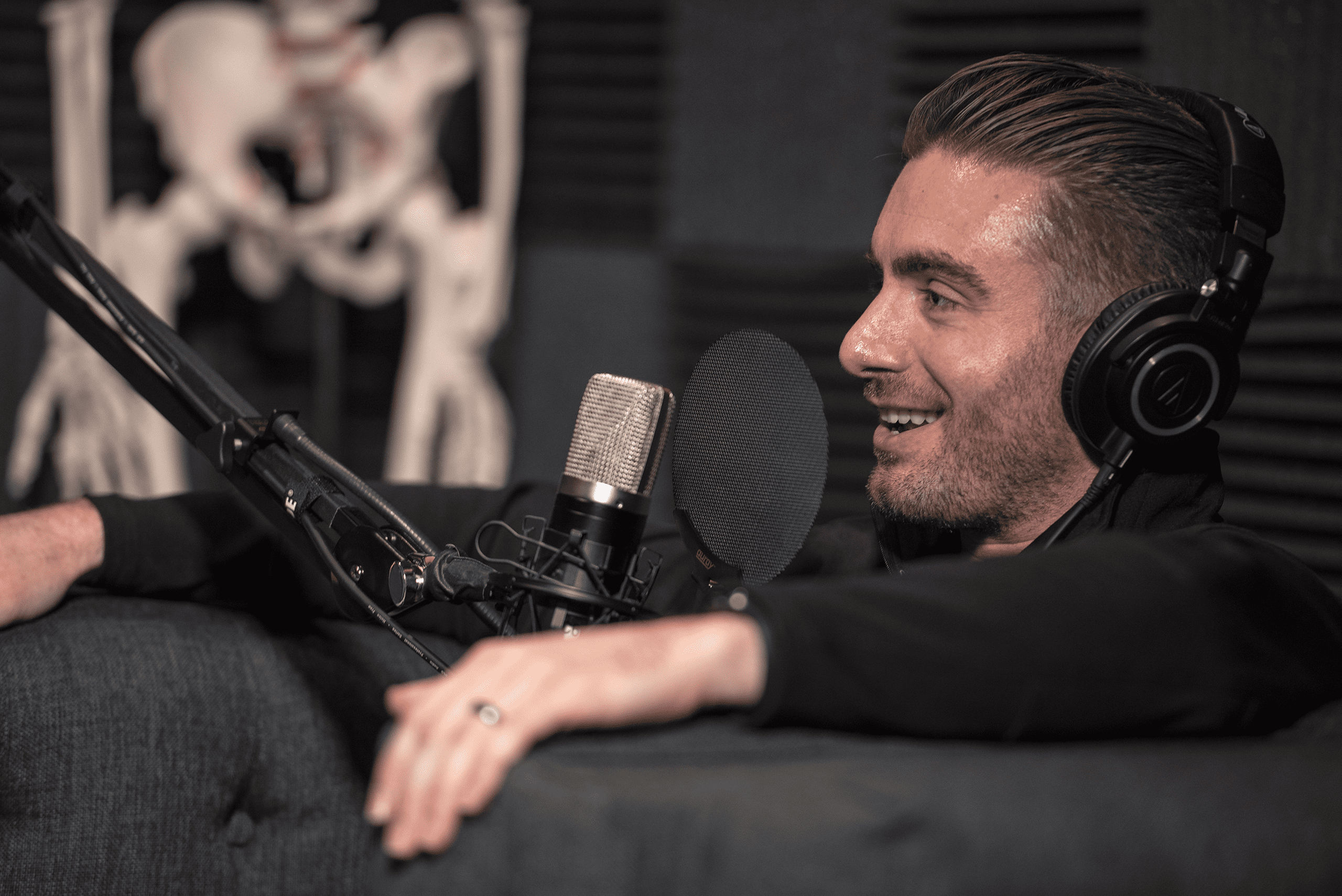
Coach. Podcaster. COACHCASTER.
Health coach turned podcaster, Chase interviews industry leaders in fitness nutrition and mindset. Messages to help you live a life EVER FORWARD.
Chase Chewning, MS, ACE CHC
Listen On


Episodes
Latest Episode

This episode is brought to you by Fatty15, LMNT and Audible.
In this gripping and mind-opening conversation, Yale psychiatrist and author Dr. James Kimmel Jr. joins us to explore one of humanity's most primal urges—revenge. Drawing from neuroscience, psychology, and personal experience, Dr. Kimmel explains how revenge mimics addiction in the brain and why many of us unknowingly suffer from “revenge cravings.” He shares a deeply personal story of nearly acting on revenge as a teenager, the lessons he learned as a litigator-turned-researcher, and practical, science-backed ways to break the cycle. From mass shootings and bullying to road rage and “revenge bodies,” this episode dives deep into the psychology of retaliation, the illusion of justice, and how forgiveness may be the ultimate act of self-healing.
"Forgiveness shuts down the brain’s pain network, turns off the revenge craving, and reactivates your self-control." - James Kimmel, Jr.
-----
In this episode we discuss...
03:25 – What is revenge? Real-life examples and dangers 06:39 – Legal revenge: Lawyers as licensed avengers 11:30 – The definition of grievance and how it fuels revenge 16:00 – Mass shooters and "grievance collectors" 17:35 – Dr. Kimmel’s personal revenge story 25:02 – Masculinity, shame, and revenge 28:27 – Why revenge seems inevitable 30:15 – Why bullies see themselves as victims 33:38 – The monster isn't people—it's the craving for revenge 35:22 – Justice vs. punishment in addiction and revenge 37:54 – Can we solve revenge like an addiction? 40:45 – The neuroscience of revenge cravings 44:18 – Legal vs. illegal retaliation and the arrow of time 49:24 – Dr. Kimmel’s revenge addiction as a lawyer 53:06 – The pain of inflicting pain on others 56:04 – The Miracle Court mental role-play 58:45 – Neuroscience of forgiveness 01:00:05 – Justice vs. revenge: How language shapes violence 01:05:21 – Why revenge escalates: evolutionary roots 01:15:58 – Revenge body & revenge sex: healthy or harmful? 01:20:04 – Road rage and everyday revenge 01:21:26 – Hollywood’s revenge addiction: From Kill Bill to The Lion King 01:28:27 – GLP-1 drugs and reducing revenge cravings 01:32:43 – Forgiveness as the fastest cure 01:36:17 – Living Ever Forward: Forgiveness as freedom
-----
Episode resources:
Save an additional 15% on C15:0 essential fatty acid with code EVERFORWARD at https://www.Fatty15.com/everforward
FREE variety sample pack with any electrolyte purchase at https://www.DrinkLMNT.com/everforward
FREE 30-day trial of Audible at https://www.AudibleTrial.com/everforward
Watch and subscribe on YouTube
Learn more at JamesKimmelJr.com
Previous Episodes

Jul 7, 2025
EFR 883: Soul Awakening, Friendship Evolution & the Power of Self-Inquiry with Krista Williams
00:00:00
00:00:00
This episode is brought to you by Pique Teas, Caldera Lab, Timeline Nutrition and Joi & Blokes.
Today is about self-discovery and personal transformation during pivotal life transitions, particularly in your 20s and 30s. Through candid personal anecdotes, guest Krista Williams from Almost 30 explores the challenge of living a life dictated by societal expectations and the importance of embracing change to uncover one's true path and identity. She discusses the role of self-awareness, spirituality, and tools like personality assessments in understanding personal gifts and strengths. The conversation extends to the impact of personal growth on relationships, the liberating journey of redefining spirituality outside traditional religious constraints, and the courage required to maintain intimacy and vulnerability within relationships. Additionally, Krista highlights the significance of accepting oneself and partners as they are, fostering deeper connections and a more authentic, fulfilling life.
"Embracing uncertainty has allowed me to find clarity in the most unexpected places." - Krista Williams
Follow Krista @itskrista
Follow Chase @chase_chewning
-----
In this episode we discuss...
(00:00) Navigating Life Transitions and Self-Discovery
(06:53) Discovering Your True Self
(13:02) Navigating Personal Growth and Relationships
(28:23) Discovering True Identity and Purpose
(34:45) Reclaiming Soul Outside Religious Constraints
(39:48) Language and Spirit
(44:11) Exploring Stillness and Soul Connection
(56:30) Embracing Personal Growth and Authenticity
(01:01:55) What Are Spiritual Awakenings?
(01:05:09) Navigating Intimacy and Self-Acceptance
-----
Episode resources:
Save 20% on Caldera Lab men's skincare with code EVERFORWARD
Watch and subscribe on YouTube
Learn more about Krista at Almost30.com

This episode is brought to you by Pique Tea, Joi & Blokes and Fatty15.
We are joined today by Dr. Sarah Daccarette, MD founder of Interbalance. She is here to explain the most-pressing issues of women's hormone health in 2025. As hormonal imbalances increasingly affect younger women, Sarah sheds light on the environmental and medical factors contributing to this crisis. She also challenges misconceptions about birth control and synthetic hormones, advocating for informed consent and personalized hormone care. Dr. Daccarett also addresses the gaps in women's healthcare, particularly around hormone replacement therapy, urging a proactive approach to aging and health management. With a focus on genetic markers and lifestyle choices, this episode emphasizes the potential of natural hormone therapies and the importance of redefining menopause and perimenopause as empowering life stages.
"The environmental toxins and synthetic hormones we encounter daily are not just affecting our health superficially; they're altering the very essence of our hormonal balance." - Dr. Sarah Daccarett
Follow Sarah @sarahdaccarettmd
Follow Chase @chase_chewning
-----
In this episode we discuss...
(00:00) Women's Health Hormone Crisis
(08:27) Key Women's Health Areas of Awareness
(14:50) How Environmental Toxins Affect Hormones
(20:04) Birth Control's Affect on Hormones
(23:36) Genetic Markers and Metabolism
(39:30) Female Hormone Replacement Therapy
(44:28) Natural Hormone Optimization Remedies
(52:19) Fasting, Longevity and Weight Management
(57:48) Redefining Menopause and Perimenopause
(01:05:32) Ever Forward
-----
Episode resources:
Save 10% on any diagnostic lab with code CHASE from Joi and Blokes
Get 20% off for life and a free hand frother a mixing beaker from Pique Teas
Get an additional 15% off the 90-day C15:0 essential fatty acid starter kit from Fatty15
Watch and subscribe on YouTube
Learn more about Sarah at InnerBalance.com

This episode is brought to you by Caldera Lab, State & Liberty, and Joi & Blokes.
Have you ever wondered why high achievers often stumble into burnout despite their success? In this episode, we unravel the intricate dance between dopamine, serotonin, and the phenomenon we call anhedonia—pleasure deafness that can take down even the most driven individuals with vitality coach Vince Pitstick. We're delving deep into the science behind neurochemicals and hormone sensitivity, revealing how lifestyle changes and diet diversity can help reclaim one’s vitality and stave off serious health risks. We also explore personal insights and groundbreaking scientific research that uncover the hidden challenges and potential pitfalls of living at the peak of performance.
"Understanding your genetic blueprint, like the impact of the 'warrior gene' on dopamine metabolism, is key to harnessing your potential without falling into the trap of obsession." - Vince Pitstick
Vince also shines a spotlight on the fascinating intersection of genetics and personal evolution, focusing on the "warrior gene" that affects dopamine metabolism. It's a riveting journey into how genetic predispositions can influence mental health and behavior, threading through the tapestry of the Van Gogh effect, where immense focus and drive might teeter on the edge of greatness and madness.
"True resilience is not just about bouncing back from adversity, but about growing stronger and more adaptable with each challenge faced."- Vince Pitstick
The episode segues into the realm of functional medicine and the transformative power of integrating mind and body for unparalleled personal growth. We’ll unravel the profound benefits of peptides, explore dietary variations, and stress the importance of foundational health practices over trendy optimizations. From the lessons learned through Vince's overcoming severe OCD and addiction to the liberating realization of self-control over one's health, we offer a comprehensive guide to anyone seeking a balanced and thriving existence. Whether you're navigating personal or professional landscapes, this episode is packed with strategies to help you nurture both your physical and spiritual growth, ensuring a life lived ever forward.
Follow Vince @vince_pitstick
Follow Chase @chase_chewning
-----
In this episode we discuss...
(00:00) Psychology and Physiology of Success
(11:59) Link Between Biology, Genes, and Personalized Success
(17:35) Build Your Best Diet and Nutrition Diversity
(27:29) Why You Need Diet Variation
(39:09) Optimizing Health With Lab Analysis
(54:49) Integrating Functional Medicine
(01:05:04) Balancing Fitness, Health and Success
(01:12:10) Building a Foundation Before Optimizing
(01:23:52) Benefits of Peptides in Biomedicine
(01:32:10) Peptides cont'd, Cancer Risk, and GLP-1
(01:38:51) Metformin and Adaptation in Health
(01:46:48) The Metabolic Impact of Chronic Dieting
(01:54:57) Ever Forward
-----
Episode resources:
Save 20% on any men's skincare item with code EVERFORWARD at https://www.CalderaLab.com
Save 15% on performance menswear that fits athletic build guys with code EVERFORWARD at https://www.StateAndLiberty.com
Save 10% on any labs with code CHASE at https://www.JoiAndBlokes.com
Watch and subscribe on YouTube
Learn more about Vince at VidalCoaching.com

This episode is brought to you by Pique Teas, Supp.Co and Cured Nutrition.
In this episode, Meagan Nunez, CEO of She Bad, shares her transformative journey from living a life dictated by societal expectations to embracing her true self. Meagan discusses the pivotal role of solitude in her self-discovery, the delicate balance between physical movement and mental stillness, and the importance of aligning life with personal values. She addresses the harsh realities of social media, sharing her experiences with negativity and advocating for self-empowerment and authenticity. Her story offers practical insights into overcoming adversity, building self-trust through fitness, and fostering personal wellness and growth.
"Fitness is not just about losing weight; it's a tool for building self-trust and realizing self-worth, helping you align your actions with what you truly deserve." - Meagan Nunez
Follow Meagan @meagnunez
Follow Chase @chase_chewning
-----
In this episode we discuss...
(00:00) Coming Home to Yourself
(13:51) How Meagan Used Solitude to Find Herself Again
(27:21) The Balance of Movement and Stillness
(35:20) Embracing Growth Through Adversity
(41:35) How Women Can Evolve Through Fitness
(55:02) The Personal Journey of Self-Discovery
(01:02:34) Ever Forward
-----
Episode resources:
Save 20% for life on Pu'er teas at https://www.PiqueLife.com/everforward
Test your supplements for FREE with the new app from https://www.Supp.co/everforward
Save 20% on Flow Gummies with code EVERFORWARD at https://www.CuredNutrition.com

Jun 16, 2025
EFR 879: Using Your Human Design to Unlock the SECRET Blueprint for YOUR Life with Erin Claire Jones
00:00:00
00:00:00
This episode is brought to you by FLYKITT, Audible, Cured Nutrition and Comrad Socks.
Do you know what career you’re really meant to pursue? Can you identify the relationships you should really be investing in? Are you living your life to the fullest? Human Design has the answers. Human Design is a mystical personality assessment that uses NASA data, astrology, and Eastern philosophy to generate mind-blowingly accurate insights into how you uniquely thrive at work, in love, and beyond. In today's podcast, and in her new book How Do You Choose?, world-renowned Human Design coach and educator Erin Claire Jones transforms this mystical system into an accessible, practical tool for modern life.
"Human design offers a mystical yet incredibly practical framework to understand how you are uniquely wired to operate in every area of life." - Erin Claire Jones
Erin shares relatable stories from her own life, case studies from her work with thousands of clients and hundreds of companies, examples of how iconic figures like Nelson Mandela, Taylor Swift, Beyoncé, Maya Angelou and more have used their Human Design gifts to change the world, and actionable tips for immediate transformation. Erin is here to dismantle the belief that there’s one “right” way to live. Instead, she will empower you to discover what’s uniquely right for you. No two people are exactly alike—so no two blueprints should be, either.
This episode will help you:
Identify the career path that aligns with your strengths
Build relationships that make you feel truly seen
Communicate more effectively with colleagues, friends, and family
Understand your role in teams and how to thrive in group settings
Make decisions of all kinds with confidence
Whether you’re ready to take creative risks, deepen your relationships, build better habits, unlock the next level of your career, start a new chapter, or simply find more joy, this episode is your blueprint to self-trust and alignment in an ever-changing world.
Follow Erin @erinclairejones
Follow Chase @chase_chewning
-----
In this episode we discuss...
(00:00) Mystical Approach to Personal Growth
(07:04) Practical Tools for Decision Making
(18:42) Enhancing Relationships Through Human Design
(27:31) Navigating Relationships Through Human Design
(34:40) Understanding the Human Design Process
(40:18) Discovering Language Through Human Design
(46:01) Meeting People Where They're at Through Human Design
(54:28) Overcoming Self Limitations
(58:44) Human Design Evolution and Growth
-----
Episode resources:
Never get jet lag again and save 15% with code CHASE at https://www.FlyKitt.com
Get Erin's book for free with your 30-day trial of Audible at https://www.AudibleTrial.com/everforward
Save 20% on the all-natural Flow Gummies with code EVERFORWARD at https://www.CuredNutrition.com
Save 15% on gradual compression socks with code CHASEC15 at https://www.ComradSocks.com
Watch and subscribe on YouTube
Erin first appeared in episode 304
Learn more at ErinClaireJones.com

This episode is brought to you by Chili Pad, Cured Nutrition, and Fatty15.
Discover the transformative power of sleep with the insights of Dr. Michael Breus, PhD the Sleep Doctor, as we unravel the mysteries of sleep health and effective parenting strategies. Dr. Breus sheds light on the significance of recognizing one's chronotype, encouraging individuals to harmonize their daily routines with their natural energy cycles for optimal sleep. From addressing the sleep challenges of newborns to understanding the role of melatonin, this episode delves into the nuances of sleep science. We explore how maintaining a consistent wake-up time can enhance melatonin regulation and dispel myths surrounding melatonin supplements, particularly for children and women on birth control.
In our exploration of supplements, we uncover the essential role of nutrients like vitamin D and magnesium in promoting restful sleep, while debunking common misconceptions about popular supplements like ashwagandha. The conversation also takes an intriguing turn into the realm of dream therapy, where Dr. Breus guides us through techniques that tap into the subconscious for self-discovery and emotional insight. We discuss practical strategies to improve sleep quality, emphasizing self-awareness over wearable technology, and offering tips for managing sleep disturbances such as snoring and restless pets.
Enhancing your sleep environment becomes a focal point as we discuss the benefits of accessories like blackout curtains and earplugs, alongside the importance of considering sleep testing if a disorder is suspected. With practical advice on optimizing daily habits for better sleep, such as strategic hydration and breathing techniques, this episode equips listeners with the tools to achieve deep, restorative sleep and overall well-being. From social media insights to affordable sleep testing options, Dr. Breus provides a comprehensive guide to navigating the world of sleep health.
Follow Michael @thesleepdoctor
Follow Chase @chase_chewning
-----
In this episode we discuss...
(00:01) Top Sleep Tips for New Parents and Newborns
(12:09) Newborn Sleep Health Tips
(19:49) How to Properly Use Melatonin
(30:42) Safe Supplements for Sleep Health
(35:13) What is Dream Therapy?
(45:02) Improving Sleep Quality Through Self-Awareness
(54:35) Best Daily Habits That Help Sleep
(01:05:07) Sleep Accessories and Techniques
(01:17:47) Optimizing Basic Wellness
(01:25:26) Sleep Testing
-----
Episode resources:
Save up to $315 on the Chili Pad cooling mattress topper at https://www.Sleep.Me/everforward
Save 20% on any natural sleep aid with code EVERFORWARD at https://www.CuredNutrition.com
Save an additional 15% on the 90-day starter kit of C15:0 essential fatty acid with code EVERFORWARD at https://www.Fatty15.com/everforward
Watch and subscribe on YouTube
Dr. Breus' first appearance on the show in EFR 024: How to improve every area of your life through the power of when
Learn more at SleepDoctor.com

This episode is brought to you by Timeline, Pique Teas, Caldera Lab, and LMNT.
Triple board-certified Dr. Joy Kong, MD joins us to uncover the revolutionary potential of stem cell therapy in healthcare's future. With her extensive expertise, Dr. Kong guides us through the transformative applications of stem cells in combating autoimmune disorders, cancer, and more. She shares fascinating stories from her practice, illustrating how stem cell therapy has offered hope when traditional methods fall short. Our conversation bridges the gap between Western and Chinese medical philosophies, highlighting the importance of treating the body holistically and the innovative possibilities this approach opens up.
"Our goal with stem cell therapy is not just to treat symptoms but to fundamentally elevate the body's regenerative potential, allowing it to heal itself more effectively." - Joy Kong
This episode takes a close look at regenerative medicine's promise, focusing on the body's innate ability to repair and rejuvenate itself. Dr. Kong explains how stem cells enhance mitochondrial function and immune modulation, offering a glimpse into how these therapies can optimize health for both men and women. We discuss the potential to slow aging and improve fertility, muscle mass, and hormonal balance, underscoring the exciting future of longevity medicine. Joy also provides insight into practical applications for men's health, from enhancing sexual health to addressing hair loss through stem cell treatments.
"By enhancing mitochondrial function and modulating the immune system, stem cells offer a glimpse into a future where aging could be significantly slowed, if not halted altogether." - Joy Kong
Ethical and regulatory considerations are a crucial part of this discussion, as Dr. Kong highlights the importance of sterility testing and the different sources of stem cells. We tackle common misconceptions about the legality and safety of stem cell treatments, clarifying the distinctions between embryonic and umbilical cord-derived stem cells. Listeners will gain a comprehensive understanding of the costs, ethical frameworks, and long-term benefits associated with stem cell therapy. Join us for a captivating exploration of this groundbreaking field that promises to redefine our approach to health and wellness.
Follow Joy @dr_joy_kong
Follow Chase @chase_chewning
-----
In this episode we discuss...
(00:00) Stem Cells and Regenerative Medicine
(06:47) Expanding Healthcare Beyond Specialties
(17:09) What is the Real Potential of Stem Cells?
(29:35) Aging, Stem Cells & Longevity
(44:06) Stem Cells for Men's Health
(53:35) Optimizing Stem Cell Therapy Approaches
(01:08:05) Stem Cell Therapy Safety and Regulation
(01:21:04) Cost and Ethics
(01:27:51) Stem Cell Therapy Exploration
(01:33:22) Ever Forward
-----
Episode resources:
Get a FREE 3-day sample pack of MitoPure gummies at https://www.Timeline.com/everforwardsample
Get 20% off for life of Pu'er teas at https://www.PiqueLife.com/everforward
Get dad the gift of good skin this Father's Day with 20% off any skincare product with code EVERFORWARD at https://www.CalderaLab.com
Get the limited edition electrolyte flavor Lemonade Salt and a FREE variety sample pack with any purchase at https://www.DrinkLMNT.com/everforward
Watch and subscribe on YouTube
Learn more at JoyKongMD.com

This episode is brought to you by Fatty15, Pique, and Strong Coffee.
Neuronutritionist Timothy Frie joins us today to delve into the intricate connections between dietary choices, trauma, and brain health. Tim shares his expertise on how our eating behaviors are often unconsciously shaped by past trauma, stress, and grief, emphasizing the importance of neuro nutrition in healing and recovery. The discussion highlights the transformative power of the MIND diet, which integrates Mediterranean and DASH dietary principles, to enhance mental well-being. We explore the challenges faced by individuals with chronic illnesses and mental health conditions, focusing on the nutritional needs of the brain and nervous system. Key topics include the Cell Danger Response, the impact of protein and micronutrient deficiencies, and the role of neuroplasticity in trauma recovery. The episode underscores the significance of personalizing nutrition to support cognitive function and overall well-being, advocating for a varied and colorful diet to optimize mental health.
"Nutrition is not just about the food you eat—it's about meeting your brain's cellular needs to sustain life and create a healthier existence." - Tim Frie
Follow Tim @timothyfrie
Follow Chase @chase_chewning
-----
In this episode we discuss...
(00:00) Understanding Nutrition's Impact on Brain Health
(13:19) Nutrition's Role in Brain Function
(18:35) Neuronutrition and Traumatic Stress
(22:35) Cell Danger Response and Health Challenges
(28:21) Nutrition, Brain Health, and Wellbeing
(37:05) Protein Deficiency's Impact on Cognitive Function
(43:11) Neuroinflammation and Nutrient Deficiency
(47:40) Nutrition, Trauma, and Stress Impact
(57:55) Understanding Trauma, Neuroplasticity, and Nutrition
(01:05:35) Trauma, Therapy, and Neuroplasticity
(01:17:36) Supplementation and Trauma
(01:24:41) Exploring Neuro Nutrition and Curiosity
----
Episode resources:
Save 20% for life on organic teas and drinks at https://www.PiqueLife.com/everforward
Save 15% on C15:0 essential fatty acids with code EVERFORWARD at https://www.Fatty15.com/everforward
Save 15% on organic lattes and coffee with code CHASE at https://www.StrongCoffeeCompany.com
Watch and subscribe on YouTube
Learn more at TimFrie.com

May 29, 2025
EFR 875: How Your Brain Lies to You and How to Overcome Self-Deception For Good with Bizzie Gold
00:00:00
00:00:00
What happens when the familiar comfort of negative self-talk and procrastination becomes the biggest obstacle to our happiness? This episode promises a deep discussion with neurocognition expert Bizzie Gold, who sheds light on the destructive patterns of self-deception we often fall into. Bizzie and I dissect how these mental traps, like justifications and excuses, subtly sabotage our goals. With relatable examples—like the simple act of putting off chores—we explore how these patterns can be recognized and disrupted to foster genuine, sustainable change in our lives.
"Healing is not as chaotic as it seems; it involves understanding your brain patterns and creating new neural pathways to break free from ingrained patterns." - Bizzie Gold
Our conversation takes an insightful turn as we examine the dynamics of control and self-sacrifice in relationships. By looking at the roles of overt, covert, and switchers, we reveal how control manifests in personal and professional settings, often at the expense of our well-being. Recognizing these patterns is a crucial step toward interrupting them and nurturing healthier relationships. Through our exploration, we aim to empower listeners to identify these dynamics and encourage behavior shifts once a sense of security is established.
Perception plays a significant role in shaping mental health and relationships, and with Bizzie, we unravel its impacts. Childhood memories and early belief systems often warp our adult perceptions, leading to what we call "reality vertigo." By understanding this, we can better navigate the fine line between self-trust and self-deception, highlighting the importance of critically evaluating our perceptions. Throughout the episode, we use engaging analogies and real-world examples to illustrate these concepts, ultimately guiding listeners toward personal breakthroughs and healing, enhancing the quality of their lives and connections with others.
-----
In this episode we discuss...
(00:01) Rewire Your Brain, Break Patterns
(13:30) Patterns of Control in Relationships
(26:04) Reality vs. Perceived Reality
(32:10) Turning Perception Into Healing
(42:25) Navigating Self-Trust
(46:02) How to Unravel Self-Deception
(59:12) Understanding Brain Patterns
(01:07:10) Ever Forward
-----
Episode resources:
Free audio book 30-day trial at https://www.AudibleTrial.com/everforward
Free sample pack with any purchase at https://www.DrinkLMNT.com/everforward
See how your supplements stack up with the free app https://www.Supp.Co/everforward
Save 15% on FLYKITT and never have jet lag again with code CHASE at https://www.FLYKITT.com
Watch and subscribe on YouTube
Bizzie's first episode was EFR 241

This episode is brought to you by Pique Teas, Z-Biotics and Caldera Lab.
Dr. Brooke Scheller, DCN, CNS is back to take us on her personal journey of nearly four years without alcohol, revealing the profound impact it has had on her life and career. As she delves into the multifaceted effects of alcohol on health, including its influence on hormone balance and mental well-being, Dr. Scheller invites you to reconsider your relationship with alcohol. We explore the growing trend of "sober curious" and how societal attitudes toward alcohol consumption are shifting, especially among younger generations. By discussing the benefits of a sober lifestyle, nutrition, and the rise of non-alcoholic alternatives, Dr. Scheller challenges the stigma surrounding alcohol abstention and celebrates the empowerment that comes from choosing sobriety. Whether you're exploring sobriety or simply curious about its benefits, this episode offers valuable insights into living a healthier, alcohol-free life.
"When you stop drinking, you start to uncover parts of yourself that you might have been numbing or ignoring." - Brooke Scheller
Follow Brooke @drbrookescheller
Follow Chase @chase_chewning
-----
In this episode we discuss...
(00:00) Exploring Alcohol's Impact on Health
(10:08) Rise of the Sober Curious Movement
(16:39) Transitioning to Alcohol-Free Life
(27:57) Navigating Social Changes Without Alcohol
(33:13) Alcohol's Impact on Hormones
(45:37) Brooke's Personal Reflection and Choice to Go Alcohol-Free
(56:45) Emerging World of Non-Alcoholic Beverages
(01:09:39) Other Benefits of Alcohol-Free Living
(01:19:11) Rethinking Alcohol's Impact on Health
(01:24:12) What Modern Functional Sobriety and Wellness Really Looks Like
-----
Episode resources:
Get 20% off FOR LIFE of the best teas at https://www.PiqueLife.com/everforward
Save 10% on the drink before your drink with code EVERFORWARD10 at https://www.ZBiotics.com/everforward10
Save 20% on Father's Day skincare with code EVERFORWARD at https://www.CalderaLab.com
Watch and subscribe on YouTube
Brooke's first appearance in EFR 785: How Alcohol Affects Your Gut Microbiome, Brain Health, Hormones, Lowers Fertility, and How to Eat to Change How You Drink and watch on YouTube here

May 19, 2025
EFR 873: The Best Predictors For Living Longer - V02 Max, HRV, Follistatin and Gene Therapies with Jay Spall
00:00:00
00:00:00
Bbiochemist and biomolecular therapy expert Jay Spall joins us to unravel his transformative journey from spinal injury to becoming a leading figure in the world of biohacking and longevity. Jay shares groundbreaking insights into follistatin therapy, detailing its impressive effects on endurance, body composition, and overall well-being. His personal narrative, combined with scientific research and anecdotes, paints a vivid picture of how cutting-edge therapies can enhance human performance and extend the quality of life.
Follow MiniCircle @minicircledna
Follow Chase @chase_chewning
-----
In this episode we discuss...
(00:01) Introduction to Biochemical Therapy (10:07) Reclaiming Our Health Through (17:30) Hormone Optimization Therapies (32:09) Modern Progressive Interventions (42:28) Taking Healthcare Power Back by Our Choices (54:49) Neurological Therapy (01:07:45) Gene Therapy for Health and Longevity (01:14:55) How to Actually Measure Longevity (01:22:14) Maximizing Healthspan and Lifespan With Gene Therapy (01:31:09) Why Community Matters (01:36:05) Connecting With MiniCircle
-----
Episode resources:
Save 15% on the best-fitting men's clothes with code CHASE at https://www.StateAndLiberty.com
Save 10% on any diagnostic labs with code CHASE at https://www.JoiAndBlokes.com
Save an additional 15% on the 90-day starter kit of C15:0 essential fatty acid with code EVERFORWARD at https://www.Fatty15.com/everforward
Never get jet lag again and save 15% with code CHASE at https://www.FLYKITT.com
Watch and subscribe on YouTube
Learn more at MiniCircle.io